
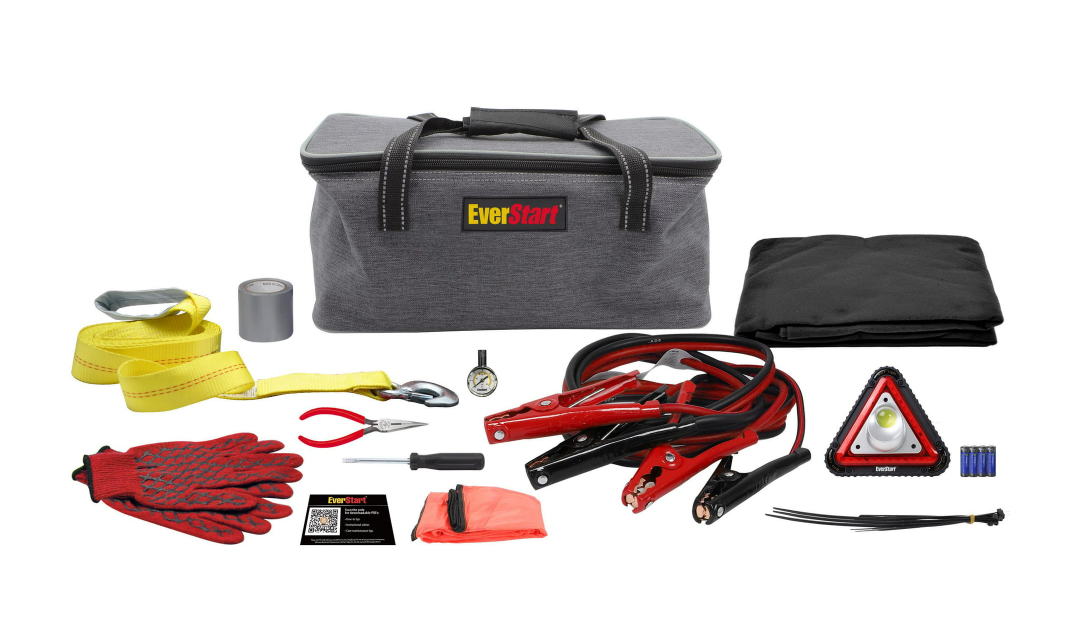
When you think about getting an emergency kit for your vehicle, most folks initially think of those off the shelf kits that come with jumper cables, gloves, maybe a first aid kit, a small 12V air compressor, etc etc. That’s not the emergency kit we’ll be talking about today.

The emergency kit we’ll be discussing today is extremely specific to the vehicle and driver. This kit will contain things that universal kits/bags do not. Exactly what you, my dear reader, put in yours will be dependent upon your mechanical skill level.
I will be referencing my own kit and the kits I put together for my daughters. My personal kit will be more in depth than that which I built for my girls. As a dad, I’m constantly worried about their safety and hoping their vehicle will deliver them home safely.
One of my daughters is away for college and I can’t get to her if something happens to her car. These kits give me the piece of mind that they can do a simple repair and make it home. I’ve been traveling a lot more lately for work and with a 25 year old vehicle with over 250,000 miles, I need to make sure I can get home as well.
So you’re now wondering what is in these kits I’ve been droning on about. As I stated earlier, it’s going to depend on your mechanical skill level and what you’re comfortable doing. However, in my humble opinion, even at the most basic level you should have simple tools, fuses, and relays. This can at least help you get to a mechanic shop or someplace safer.
If you’re a little more confident, you can add spare bulbs to your kit. I recommend at least 2 each of turn signal, marker, brake, license plate, and/or headlight bulbs. Or any combination there of that you know how to change.
Getting into the more advanced repairs, you’ll need to make sure you have with you tools of the correct size for the nuts and bolts you’ll be loosening and tightening during the repair. Roadside repairs could include coolant hoses, serpentine belt, pulleys, exhaust connections, etc.
The basic kit for my daughters
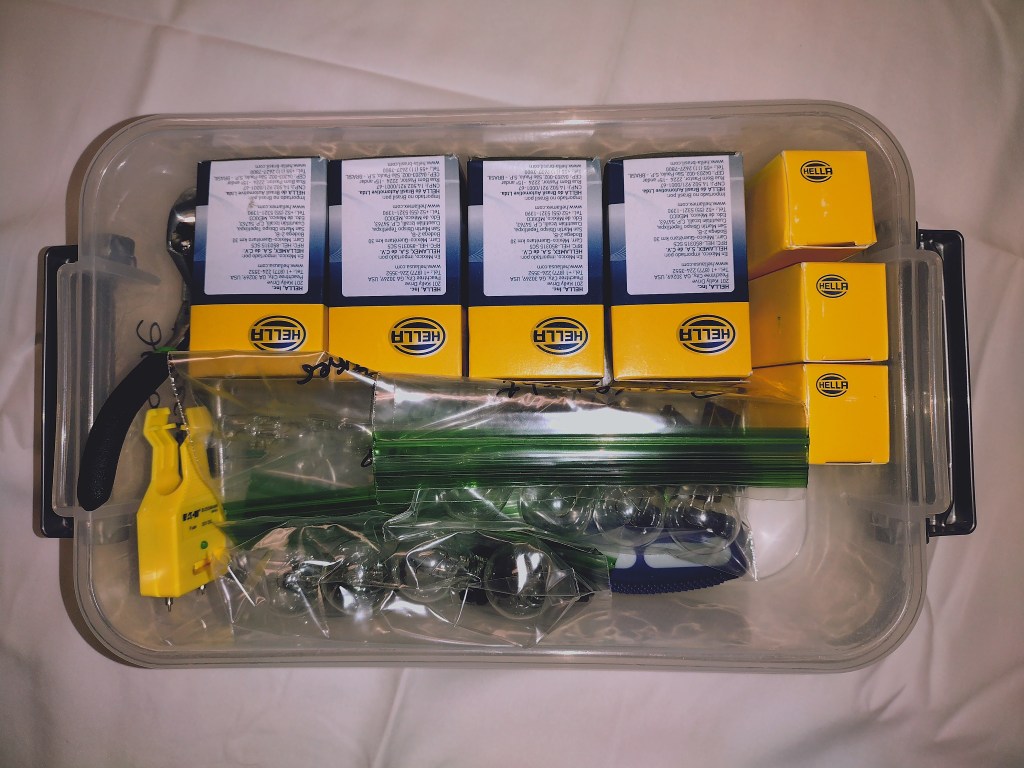
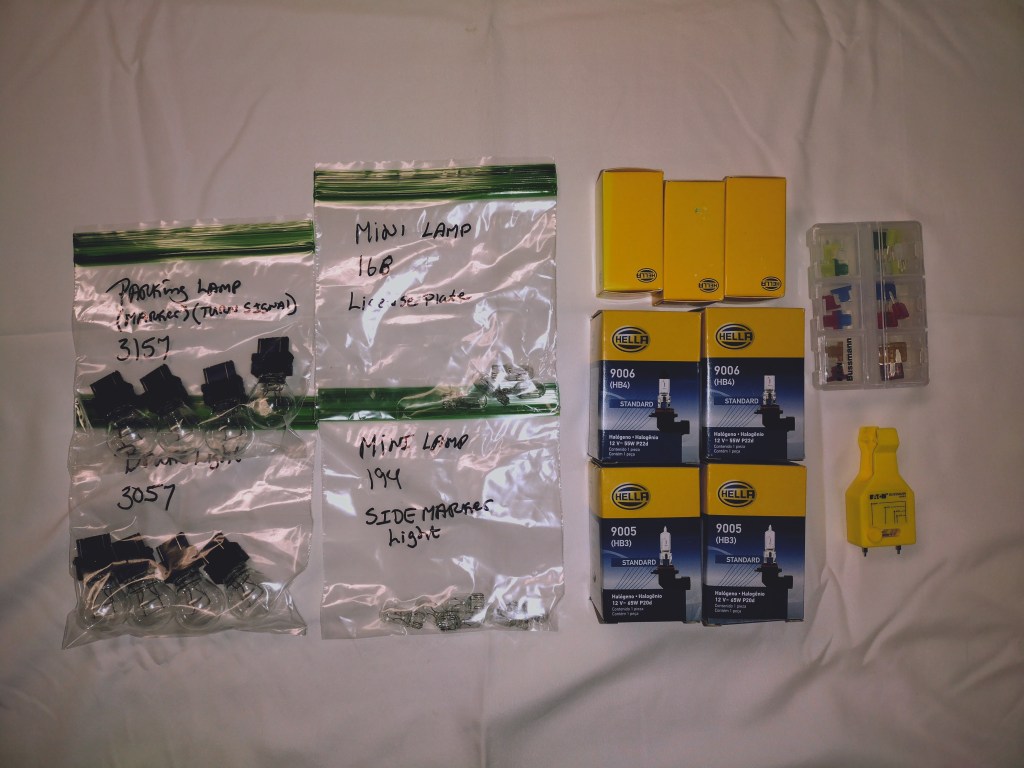
In this kit that I built for 2 different vehicles. Vehicle 1 is a 2011 Chevy HHR and vehicle 2 is 2008 Buick Lucerne. With these 2 vehicles, I got lucky because they’re both made under the same parent company’s umbrella so they share a lot of the same parts. Both kits are identical except for the items that are specific to that vehicle like the headlights.

Kit items
- Marker/Turn signal bulbs
- License plate bulbs
- Headlight bulbs
- Tail light bulbs
- Multi-use relays
- Fuses (multiple amp rated)
- Flat tire repair kit
- Rubber glue
- Plugs
Tools
- 4 in 1 screwdriver
- Mini needle nose pliers
- Adjustable wrench
- Flashlight

The slightly more advanced kit for myself
I currently, at the time of this post, drive a 1998 Dodge Durango with over 250,000 miles and it is still going strong, well for the most part. As stated earlier, I NEED to make sure I can get home. So while I may view the roadside repairs I’m prepared for as simple and easy, know what you are capable of and comfortable doing on the side of the road.

1998 Dodge Durango
- Headlight bulbs
- Marker/Turn signal bulbs
- Tail light bulbs
- Serpentine belt
- Idler pulley
- Exhaust hangers
- Exhaust clamps
- A couple of quarts of oil
- Tire repair kit

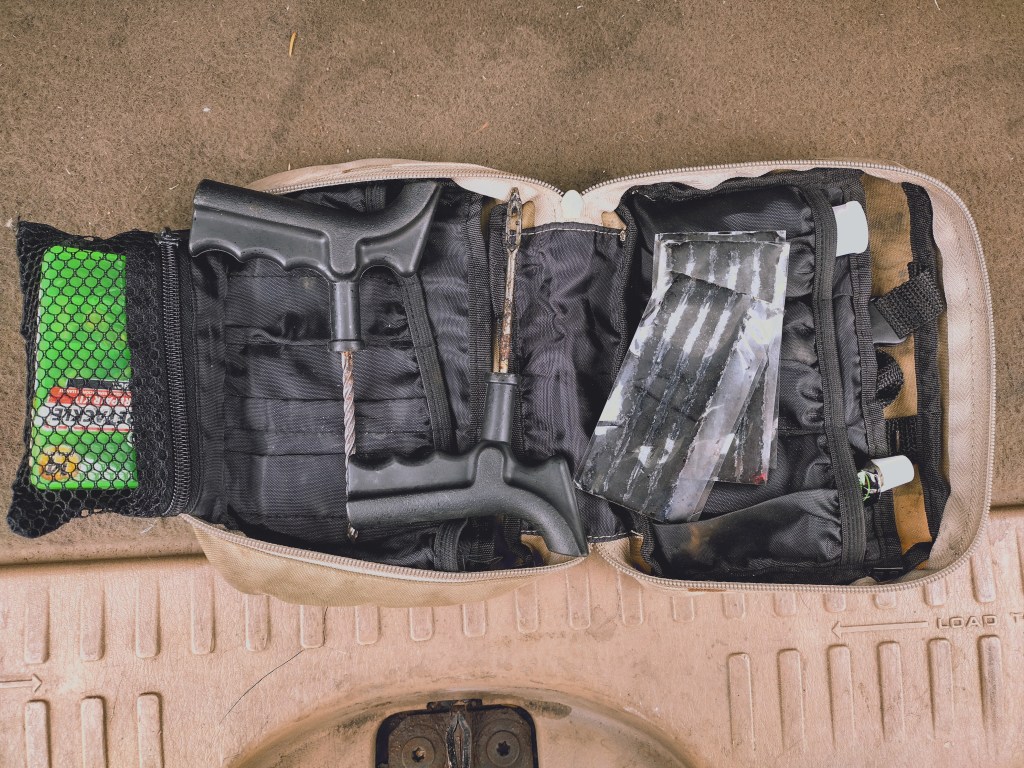
Some of you may notice the picture doesn’t match the list. I do have future items listed that will be added to the kit as finances allow. So yes, in the near future, I will have everything on the list and maybe a few extra things I think of later.
Tools
- Ratchet
- Sockets
- Pliers
- Screwdrivers
- Short handle hammer
- Fuse tester
- Small files
- Small picks
- Lubricant
- And a number of other tools I’m forgetting at the moment


Wasn’t expecting that to happen…
August 2018 I was traveling down to Florida after my dad passed away to get the stuff I was taking that couldn’t go home with me on the plane earlier that year. My middle son was driving at the time and we just crossed into Georgia heading south on I95 when he said to me something happened to the steering. I was slightly concerned because I was about 1000 miles from home and didn’t know exactly what was wrong yet. After getting the Durango to the side of the road and looking under the hood, my idler pulley is what catastrophically failed causing the serpentine belt to shred somewhere in the last couple miles.
At this point, I’m on my phone looking for both a hotel and a parts store within walking distance of each other. My kid is still in the driver seat thinking he did something wrong and my best friend who was napping in the back seat is now on the phone calling for a tow. By the time we were able to coordinate everything, the parts store was closed as the Durango was unloaded from the flatbed tow truck. Bright and early the next morning, I got the parts I needed and by the time everyone else was ready and walking over, I was finishing the repair.
Now I did have tools with me to make the repair with, but had I thought that the bearings in the idler pulley would explode and fail like they did, I might have had the pulley and belt with me already or better yet, I would have replaced it before I even left. In my defense, that particular pulley had shown zero sign of potential failure when I did my pre-trip inspection. I had no real way to know when it was going to fail. It could have failed at any time, anywhere. So since that day, I have kept an emergency repair kit in my Durango.
In conclusion
Life is all about survivability and predictability. However, we cannot predict every eventuality. That’s impossible, and that’s what this type of kit is for. Helping you to survive, more emotionally and mentally, some of those unpredictable moments with your vehicle. When you are better prepared to deal with an unknown event, that event doesn’t seem to be as big of a deal.
Did it happen? Yes. Were you able to prevent it from happening? Probably not unless you knew about the problem and didn’t do anything sooner. Are you prepared for this unknown event? Maybe, it depends on how you built your emergency kit.
If you are prepared, grab your tools and the part to be repaired and fix it and move on. If it’s beyond what you prepared for, take a breath, it’s okay, call for a tow truck, get your vehicle home or to your mechanic and get it fixed.
As one of my favorite niche celebrities, Creek Stewart would say, “It’s not If, but When.” Things will go wrong, shit is going to hit the fan, it’s guaranteed to happen that much you can count on. The million dollar question is when. When will that fuse blow, when will that ball joint break, that we can’t predict with any amount of accuracy. However we know it’s going to happen, so we can try to be as prepared for when it does.

 The Wandering Leatherneck