
Land navigation has become a wayward skill in the digital age of the GPS. What would you do if your batteries run out? Conventional teaching from your childhood says that when you’re lost, you should stay put and wait for rescue. Well what if that’s not an option? What if you have to get to a better spot to be rescued?
You have your trusty cell phone you say? Oops, no signal and there’s only 10% battery life left because it’s been roaming for the last 6 hours. Now what? Well if you had packed a map and compass at the bare minimum, you’d be better off. But just having it means nothing if you don’t know how to use it.
Map(s)
What’s in a map? Well your life may just depend on it if you’re GPS or phone won’t work where you’re at. In the most basic form, a map is a piece of paper with stuff drawn on it that can lead you to a location or let you find your location. But first you need to know how to use and read it. For that I suggest taking a class, if offered in your area, or there’s plenty of videos to get you started on YouTube that will get you at least the basics.
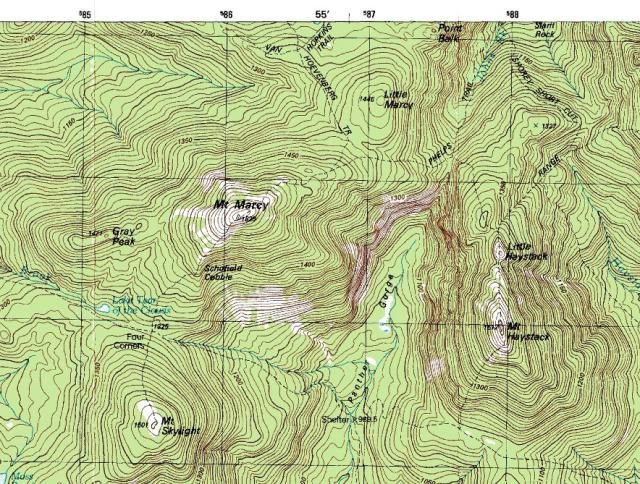
Now there’s different maps for different purposes. What type of map you use will depend on what your needs are. I could do an entire article on just maps alone, and I just might in the future. For now we’ll stick to an overview and what I take with me and why.
Compass
A compass is a compass is a compass. Not all compasses are made equally. However, they all do perform the same basic function. They will all to some degree, give you a directional pointing. Some compasses are manufactured to higher quality specs than others, so they will be quite a bit more accurate. Some compasses will have features you may not need. So how do you pic a compass that works for you? Well decide on how much you are willing to spend, then see what ones fit in your level of knowledge. Again, a $1 compass is far better than not having one at all.
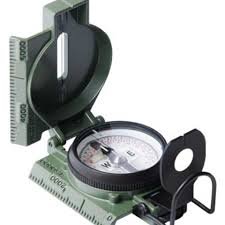
So why should someone need and have a compass when they have a cell phone or GPS device? Well, cell phones do not get reception everywhere you may travel, and like GPS, reliant on a battery to work. A compass is a simple device that aligns to the magnetic poles on the earth and gives you an accurate idea of direction. Over distance it allows you to maintain a fairly straight walking line with out ending up going in circles
Protractor
A protractor?? Isn’t that for doing math things with angles and such? Well yes, you use a protractor to measure or create angles in geometry. However, that is not the type of protractor I am talking about here. This is a specialized type of protractor used with maps, specifically Topographical maps. Knowing how to use a mapping protractor can drastically improve your chances of rescue, either by self or a team.
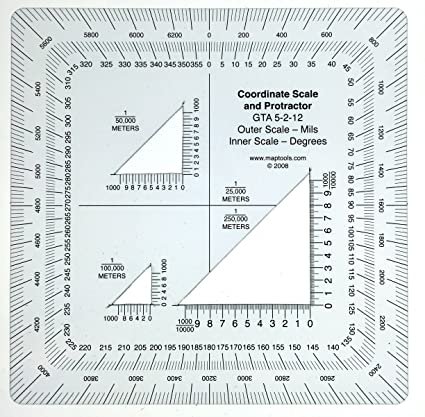
See when you know how to use this protractor with a topographical map, you can very precisely pinpoint your location that will drastically narrow down the search area for a SAR (Search & Rescue) team to find you. Just like the map and compass, it takes a little bit knowledge to properly use.
Cell Phone
Is it safe to say that everyone has a cell phone these days? More than likely yes it is. And more than likely everyone has a smartphone with the ability to be used as a GPS device. That said, phones loose signal so mapping apps will only work in limited capacity if at all. Batteries die, and without a way to charge them again, they become useless. That is why I always recommend to take a map and compass with you as a backup. Things happen and you don’t want to be stranded.

I typically look for and get phones that are ruggedized and meet the Milspec standards because I do spend as much time outdoors in harsher environments than the average person. So for me that is normally a feature I pay attention to. However, with the proper case, you can help any phone better stand up to the outdoors and the riggers you might expect it to deal with. I am currently running the Moto G Stylus 2021 model as my phone of choice. It has all the features I want, except it’s not ruggedized, but with a screen protector and case, it has survived many falls thus far and works perfectly.
Whistle
What in the hell could a whistle do for me in an emergency situation? Well, the biggest benefit to having a whistle is, it will allow you to conserve your voice for when you can hear or see rescuers near by enough to hear you. Your voice will only last you so long before you loose it calling for help, then you’re in trouble.

A good whistle should be loud enough to be heard over a good distance. There are several options available commercially that are “emergency whistles” for you to choose from. A coach’s whistle could work if it’s all you have, but I wouldn’t recommend it.
Flashlight
A good flashlight can make all the difference in your trip, especially if things go awry. Because you’ll likely not be in a tactical situation, a red light feature isn’t something that should be high on the list. However, I would recommend that your flashlight have the SOS mode. This way, you can tie it to a tree, turn it on to flash sos while you stick close by using your whistle to attract attention to your location.

Air Horn
A good air horn can serve multiple functions. The obvious use is as non verbal communication. A secondary use is to scare wildlife from your immediate area. While some depending on manufacture and model, may be bulky, or have some weight to them, they are still good to have in case of emergency.

I bought mine almost 10 years ago before pepper/bear spray was legal in my state as a just in case option for a bear encounter. To date, I have never had to use it and it is still fully functional. I test it about once a year with a quick 1 sec or less press of the button to make sure it is ready for the coming year.
Conclusion
It is always a good idea to have an old school method of finding your way in the backcountry. Remember, phones will not always have a signal and anything electronic will eventually run out of batteries becoming useless paper weights. In the event you still wind up lost, conserve your voice by using other methods to get the attention of rescuers like a whistle, air horn, brightly colored cloth, etc. I, personally, always have some combination of the above items with me whether I am solo or with someone else. I also make sure that at least 2 people I can trust know my plans so that if I do get injured and can’t make it back out of the woods, they can call for rescue in the event I can not. I don’t know what else more can be said, other than use that super power we all have called “common sense” and be safe in all you do but still have fun at the same time.
Links
The following links may not be to the EXACT gear pictured, however, will be to what I could find comparable to what I have and use. Some are a generalized search so you can pick exactly what you want or give you an idea what might be found at that retail store if it applies.

 The Wandering Leatherneck