
Food and Water, we all rely on it to live in some degree. Some eat and drink more than others, however, it’s something we all have in common. So in this installment, I am going to discuss the 3 main food options for hiking and backpacking as well as the 2 main options for gathering your water.
So what are the 3 main meal options for when you’re out on the trail you ask? Well you have MREs, Freeze Dried, and Store Bought. Included in with store bought meals will be dehydrated meals, using the assumption that you will be dehydrating your own at home.
MREs (Meal Ready to Eat)
MREs are probably the least thought provoking option for food while out in the backcountry. Each MRE typically contains enough fortified food to give you approximately 2,000 calories per meal package. The MRE is also the heaviest of the 3 options we are talking about.

The MRE was developed, refined, and typically given to the military when out in the field. Military MREs normally have 24 different meals to choose from and the meal selection is updated every few years. With a shelf life of up to 10 years, depending on how it’s stored, makes for a good long term storage option.

A typical MRE meal consists of a chemical heater, a main meal, a side, a bread/cracker, a spread, a candy/dessert, a drink mix, an accessory pack, and a spoon.
Freeze Dried
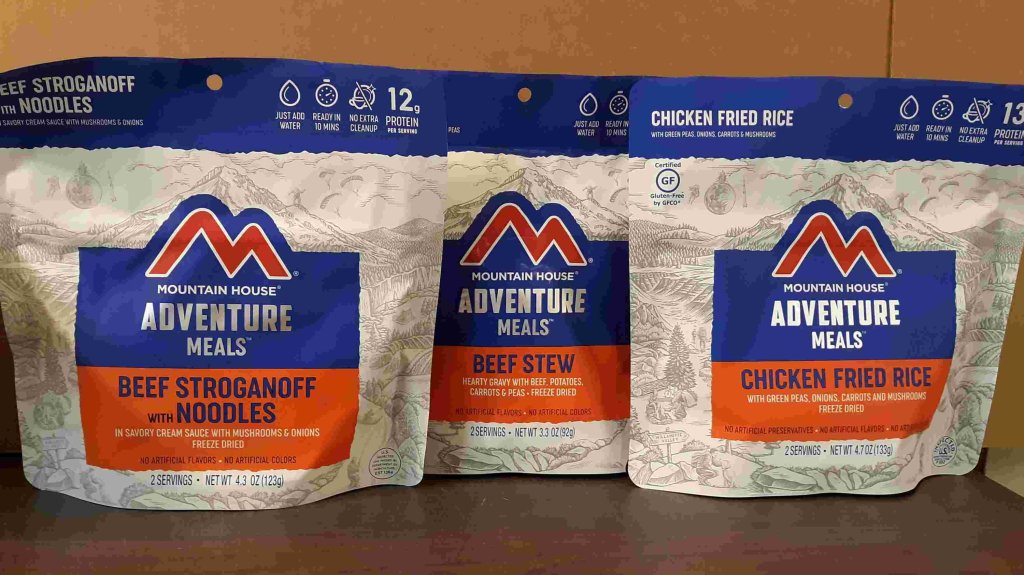
There are several freeze dried meal companies with different meals available for your dining pleasure. This by far is the lightest weight option, however it requires the most amount of water of the 3 options here. So far I have only used “Mountain House” brand meals. While they were no doubt delicious, I had some issues with things not getting mixed as well as they should or rehydrating properly. Now I am willing to chalk this up to inexperience with using the meals as 2021 was my first time buying them and using them.
Store Bought
Putting together your meals from store bought food can be fun, but yields the most variety of options. Some may find this endless combination to be overwhelming, and that’s ok. There is a lot to choose from and you might not know what makes good backpacking food or not.

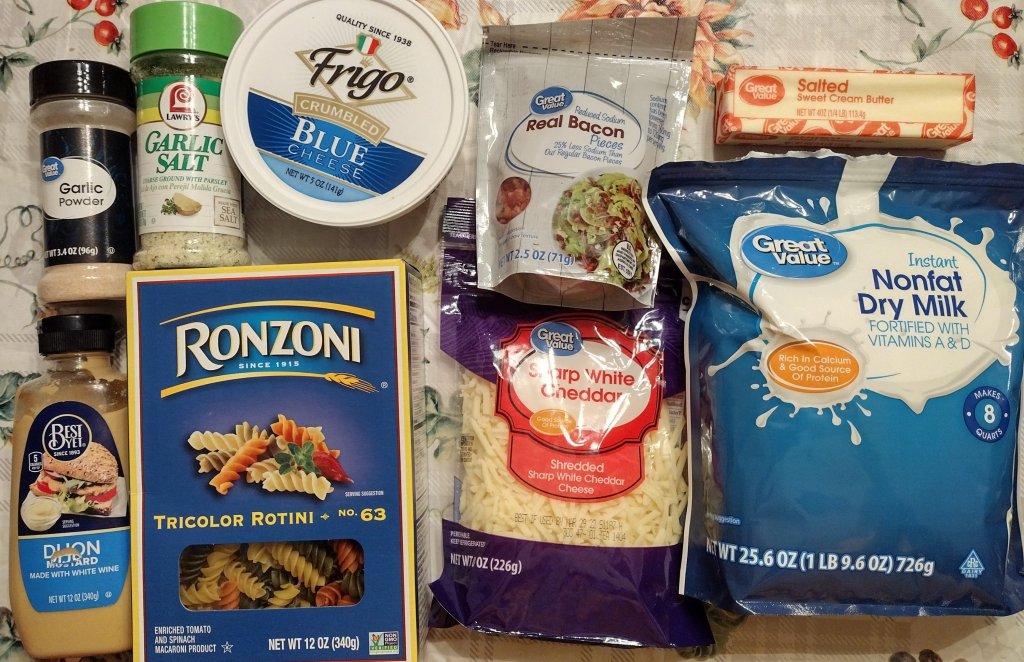
I am here to tell you, it all can make for good backpacking food, depending on how much bulk and weight you’re willing to carry and how far you are hiking. However, anything that can be combined for a light weight, high calorie meal should be the goal. I am currently working on a “backpacker’s cookbook” filled with tried backpacker recipes I’ve collected to help guide folks in their food decision making.
Water
Water can be said to be the single most important thing you will need in the backcountry. Not only do you need it for your own survival, you need it to cook your food too. But not any ol’ water will do, unless you can either guarantee its safe use or filter to be safe to use. The 2 most reliable ways to guarantee you have drinkable water are to bring it from home (apx. 8lbs per Gal) or filter it on site.

Sometimes, I will pack in a small amount of water, just enough to get me to my destination and make a meal when I get there, then find a water source and filter the rest of what I need for the duration. This combination seems to work well for me and keep my pack weight down. After all, water isn’t light in decent quantities (apx. 8lbs/Gal). I always try to make sure I will be near a source of water. My homemade gravity filter system, pictured above, will filter water at a rate of apx. 1L/1min.
Conclusion
After years in the military and watching the evolution of the MRE, they are no longer a grueling option to have. Though, I personally never really found them to be all that bad. No they were not mom’s home cooking, but they were palatable and provided all the nurturance you needed. What I didn’t know till after I got out, was that each MRE was 2000 calories and intended to be an entire day’s food supply, NOT a single meal by itself.
Freeze dried meals, at a fraction of the weight, have become more of a go to, to replace the MRE. They are nutricous, delicious, and practically weigh nothing. I would suggest buying a couple to practice with at home so you can figure out the rehydrate time and how to best mix everything in the bag.
Store bought meals have become some of my favorites now. I can custom tailor each meal to exactly what I like and never have a bad meal. While they can get expensive depending on what you buy, in my opinion, it’s still worth it because of the level of control you have over the ingredients going into each meal. And just like the freeze dried meals, I highly suggest making your planned meals at home first to work out any bugs before you make them on the trail.
So while what you take out on the trail to eat, is ultimately up to you, you should take the time to experiment while at home with your chosen meal plan. There is no right answer to what is the best food to take on the trail. But the wrong answer is taking nothing at all unless is a quick hike you can do between meals, then you can get away with not taking anything. I personally use a combination of freeze dried and store bought meals when I go out on the trail. How much I take depends on the length of the trip, but I always have something, even if it’s just snack type foods.

 The Wandering Leatherneck