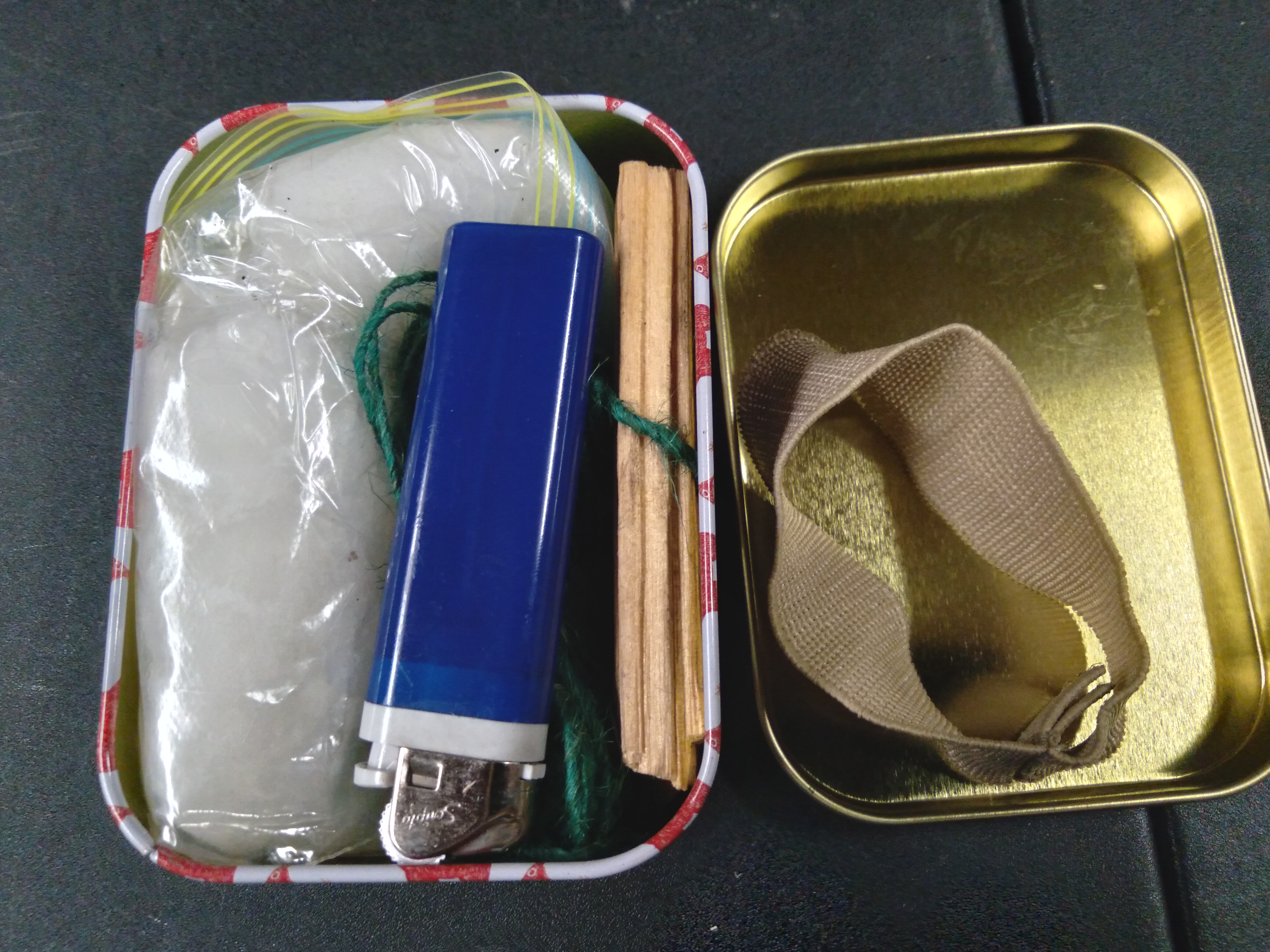
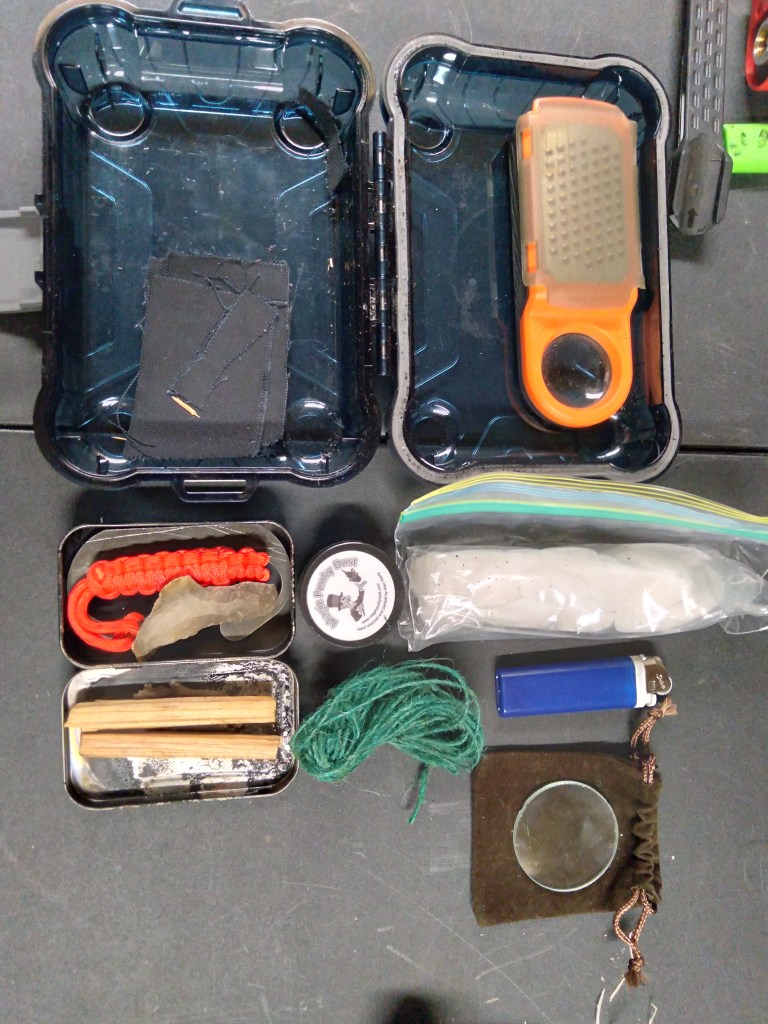

- Jute twine
- Bic Lighter
- Fat wood
- Cotton balls in mineral oil
- Small tin container
Optional
- Magnifying glass
- Punky Dust
- Flint and steel
- Matches
- Ferrous Rod
- Tinderbox
FIRE
Fire is absolutely a living entity. We may not think it is, but it truly is. It has life. It can be created and killed. It requires food and oxygen to sustain itself. If you know how to listen, it will speak to you. If you don’t respect it, it will hurt or even kill you. In my book these are all things that define something that is alive.
Fire requires 3 basic things to live, fuel (food), oxygen, and heat (spark). While all three are present, fire can be created and live. Take one away, and fire will die. Not all that different from us humans who think we are superior to everything else. We think that because we have mastered fire, we are the top of the food chain, yet without fire we are likely to perish. How does that make us better than the rest of the animals who haven’t mastered fire? What sets us apart is that we learned not to give into instinct and run from it. We learned to harness and respect it, most of the time. And when we get complacent and loose that respect for fire’s awesome power, it has no qualms about reminding us.
So in short, remember that fire is a living thing. And as such, ALL living things deserve our respect for their place in, not only our lives, but in nature.
MY MAIN FIRE KIT
Jute Twine
What exactly is jute twine? Well, jute twine is an all natural plant based fiber. It is composed primarily of the plant materials cellulose and lignin. Because of its fiberous nature, it makes a great tinder bundle or bird’s nest.

To unwind it, place the two ends between your thumb and pointer finger on each hand and twist clockwise to unwind. As the fibers

Fat Wood
What is fat wood? Fat wood is an easily sourced, if you know what you are looking for, tinder material. While it is possible to source your own, and many people do, it is also widely available on the commercial market too. I, personally, when using fat wood to start a fire, use it in conjunction with the feather stick method. This, I find, helps enhance it’s ability to catch fire and burn long enough to get the rest of the material stacked and burning. For what ever reason, fat wood is easier to find in southern states rather than northern states.
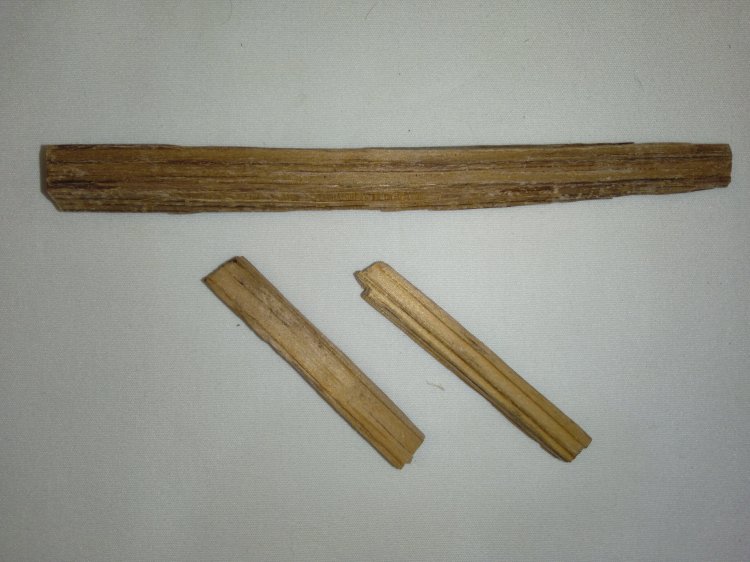
Fatwood, also known as “fat lighter”, “lighter wood”, “rich lighter”, “pine knot”,[1] “lighter knot”, “heart pine” or “lighter’d” [sic], is derived from the heartwood of pine trees. The stump (and tap root) that is left in the ground after a tree has fallen or has been cut is the primary source of fatwood, as the resin-impregnated heartwood becomes hard and rot-resistant over time after the death of the main tree. Other locations, such as the joints where limbs intersect the trunk, can also be harvested. Although most resinous pines can produce fatwood, in the southeastern United States the wood is commonly associated with longleaf pine (Pinus palustris), which historically was highly valued for its high pitch production.
https://en.wikipedia.org/wiki/Fatwood
Cotton balls in Mineral Oil
Doesn’t that stuff evaporate? Yes, over time if left to open air, the mineral oil will eventually evaporate. However, I make smaller batches of mineral oil soaked cotton balls as I use them to start fires in my fire pit at home too.
I love using these because you get a couple minutes of slow burning to get your fire going. And this is especially important if you’re trying to get a fire started in damp conditions or with moist wood. There is another variation of this called a PEET Ball in which the mineral oil is substituted for Vaseline or petroleum jelly.

To make them is really easy. Simply put your cotton balls in a container and pour the mineral oil over top of the cotton balls. Make sure if your not going to use it right away, your container is sealable and as air tight as possible to minimize evaporation. Now your cotton balls should be soaked through but not dripping wet. If they’re not wet enough just add more mineral oil. If there’s too much and they’re dripping wet, add another couple cotton balls to soak up the excess moisture.
Lighter
WHAT!?!? You’re using a lighter? Isn’t that cheating? Depending on you personally, maybe it is, but it is also the quickest most efficient way to start your fire. And if your life depends on it? Why wouldn’t you use it and get your warming source going faster? This is one of the most consistent ways to light a fire by far, however it is not without it’s downfalls. If your lighter gets too wet, it won’t work. Also, when it runs out of fuel, you won’t get a flame either. However, if you have planned ahead, you’ll know that the striker within is a mini ferro rod and by removing the tin shroud you can use the top of the lighter to create sparks and ignite your tinder.

Tin Container
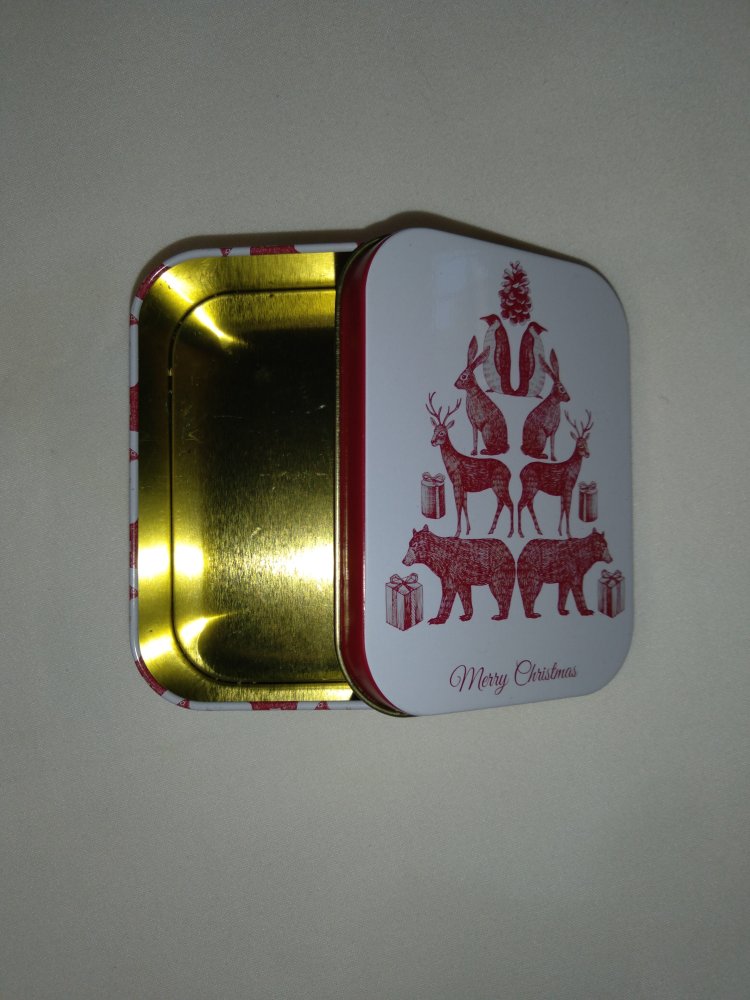
Why use a tin container? Why not use a tin container? It can have multiple purposes other than just to carry your fire kit. You can use it as an improvised cup or bowl, make char cloth, boil water if needs be, etc.
This particular one I have no idea where it came from or how I even aquired it. However, it’s just the right size for my needs, doesn’t weight alot, and I already had it.

Optional Items
Flint and Steel
Flint and Steel is one of the most primitive ways I have to create fire with. I find using this method to be one of the more satisfying ways to create your fire. It is also one of the more time consuming ways as well. Flint is a type of rock that when struck by the right kind of metal, creates sparks. Not any metal will do, it has to be a high carbon steel used to strike the flint with to get sparks. Once you have those 2 components then you need something to catch and ignite the spark and this is where char cloth comes into the picture.
After a long day hiking, you have to gather all your materials, make your tinder bundle (bird’s nest), then strike your steel against the flint hoping to get enough spark on your char cloth. Once all that’s done, you have to take your now burning char cloth and put it into the tinder bundle you have waiting. At this point you still don’t have fire as you still need to gentle but firmly blow into the bird’s nest to get your ember (the char cloth) hot enough to ignite the tinder. Once the tinder has caught fire and you have flame, then you can put it in your fire pit and add small sticks to feed the fire until you’re at the size wood to sustain with minimal input from you.
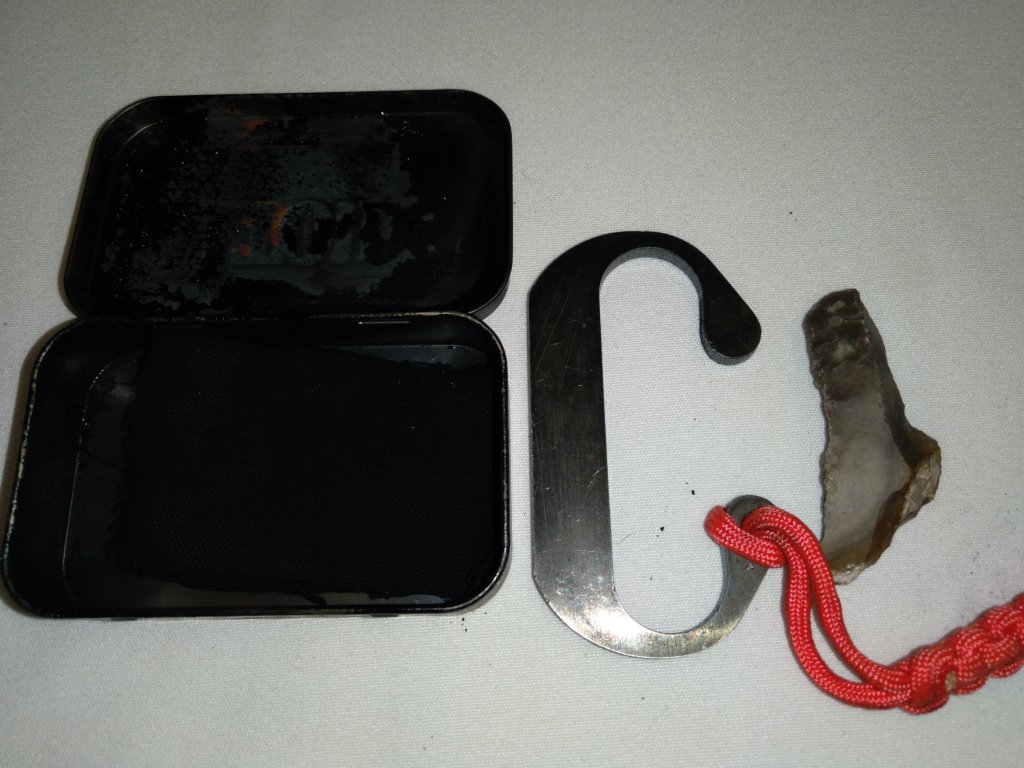

Char Cloth? Wait what’s that? Char cloth is the remains of burnt cloth. It’s made in a tin container by placing cotton based material inside, closing the lid and placing the container at the base but on the edge of your fire for a few minutes. You will want to watch for smoke to come out of the container, once that smoke stops and is replaced by a clear gas, it should be done. If the char cloth is not black, close the container again and put back in the fire. Once the char cloth is completely black, it is done and ready to take a spark.
Char cloth is the carbon remains of you cotton material. As the container heats there’s a lack of oxygen which leaves the carbon behind in the form of what it started out as. At this point it is very brittle and will crumble in your hands if you’re not careful.
There are several commercially available options for a flint and steel kit if you choose to go this route for starting a fire.
Magnifying Glass
A magnifying lens is kinda a fun way to start a fire and most of us have experience whether we’ve done it on purpose or not. It works by focusing the sun’s radiation to a find point expediting the ignition process. Here in the Northeast, I find this method to very unreliable. As we have lots of rain, cloud cover, etc., it is not easy to get the conditions nessicary for use of this method. So that said, this option might be better served elsewhere in a different environment. However, that does not detract from the fun of practicing with it in the backyard when conditions allow.

Punky Dust
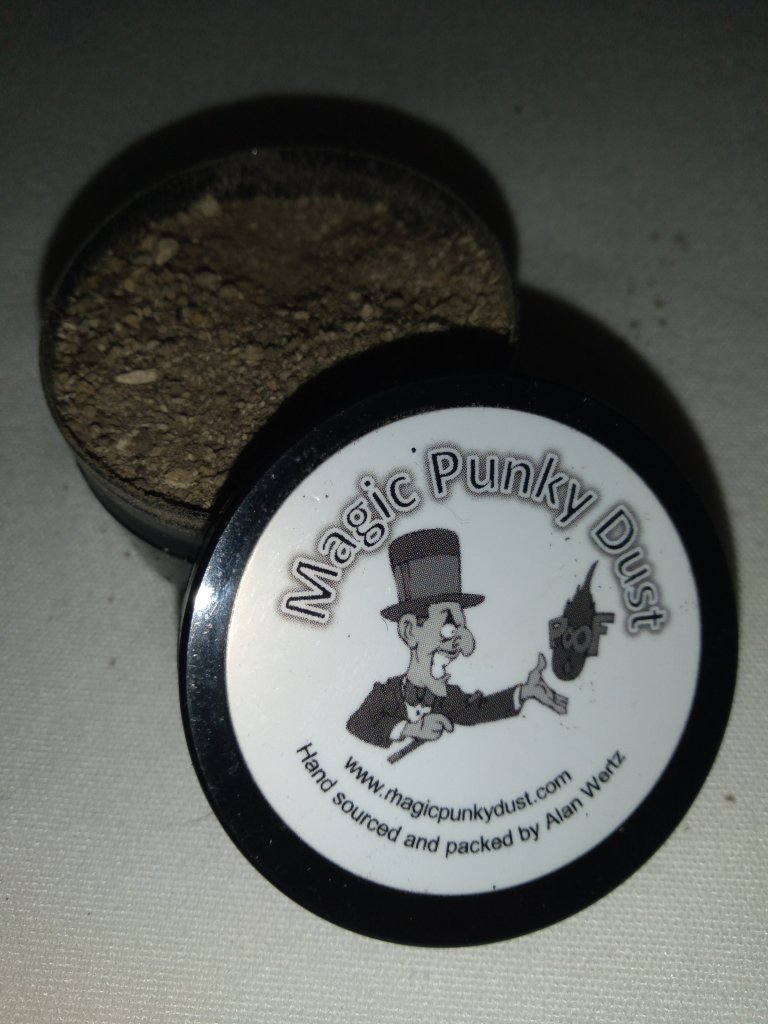
Punky Dust is one of those items I picked up years ago and have yet to use. It’s intended to be used in conjunction with the magnifying glass to create your ember with. The idea is to use the magnifying glass to ignite the dust and get it to smolder into an ember. Interestingly enough, this is not a one time use item. The ember stays in one area slowly burning so you can retrieve it to put in your bird’s nest.
Punky Dust is dry rotting wood that’s been ground down into a fine dust like consistency.
Matches
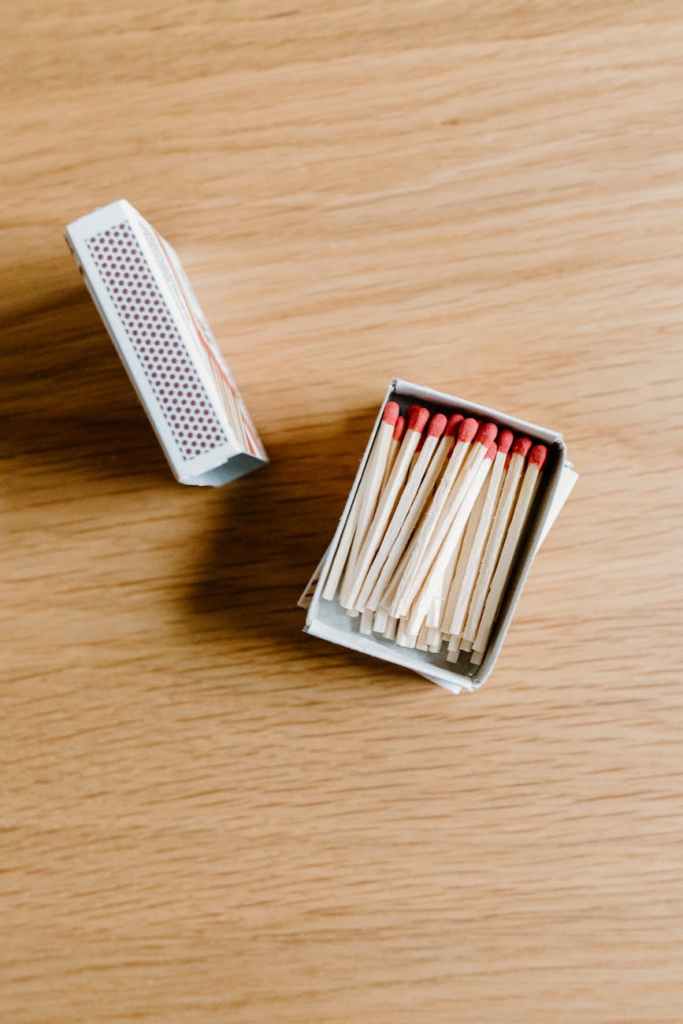
Another basic fire starting tool. Almost everyone has used matches at some point. However, it is worth noting that in damp conditions, especially if the matches have gotten wet themselves, may not light and be useless. So if you are planning on these being your primary source of fire, make sure you have a backup plan to create your fire incase these fail you. I tend to only take matches when I am car camping or sometimes for the fire pit at home. There are options available if you want to use matches that are water and wind resistant. Storm Proof matches are what you want in that case.
Ferrous Rod
Ferrous rod or Ferro rod is an Iron, Cerium, and Lanthanum based striking rod. In it’s simplicity, it s a rod and a striker. However, do not let that mislead you, you do not actually “strike” the ferro rod. Instead, you take the sharp 90* edge of your striker and push it down the long side of the rod. While maintaining constant contact between the rod and striker at the right angle and pressure you should get a shower of sparks. One of the better ways to do this is to place the end of the rod on the ground to stabilize it. If not adjust your angle and pressure until you do. As you work through the black protective coating, it may take a few tries before you start getting sparks. In addition, you do not want to allow your ferro rods to become saturated with moisture as it will cause the ferro rod to deteriorate and not work.
I find this to be one of the more reliable methods to start a fire in a wide range of weather conditions and if I am going to be out camping for a few days, I tend to always carry one with me just in case.

Ferrocerium is a synthetic pyrophoricalloy that produces hot sparks that can reach temperatures of 3,000 °C (5,430 °F) when rapidly oxidized by the process of striking the rod, thereby fragmenting it and exposing those fragments to the oxygen in the air. This property allows it to have many commercial applications, such as the ignition source for lighters (where it is often known by the misleading name “flint”)… Due to ferrocerium’s ability to ignite in adverse conditions, rods of ferrocerium are commonly used as an emergency combustion device in survival kits.
https://en.wikipedia.org/wiki/Ferrocerium
Tinderbox
This is another one of those things I got and haven’t used yet. So I can’t really speak on it too much at this time. Hopefully I will get to try it out and do a proper write up/review on it in the future. The concept is you rub it against a tree, branch, or piece of wood and shave pieces off to be used as tinder.

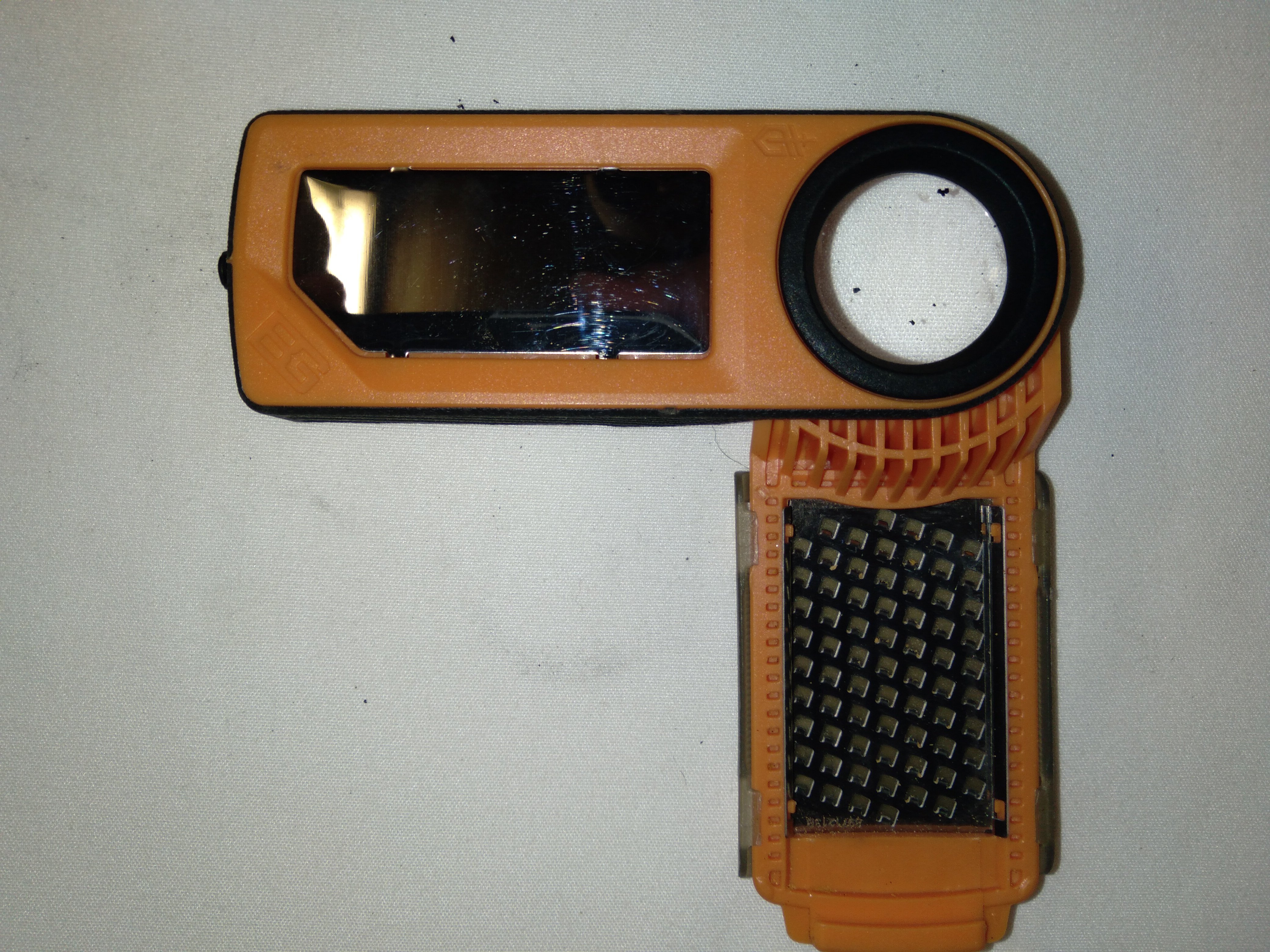
This particular item is nice because you can store matches or a lighter inside the box. It also has a magnifying glass and signal mirror built into one convenient handheld package.
Final Thoughts
Overall, my kit fits my needs and works like I need it to. It’s adaptable as my expected situation may dictate. You can copy my kit or make yours for your needs and environment. I believe my personal kit will work well in a wide variety of conditions.
But no matter what you choose to put together for your fire kit, make sure you know how to effectively use every component. And more importantly, know more than one way to get a fire started. Don’t rely on only the couple of ways you carry on you or in your pack.
I absolutely can use everything in this post to start a fire with and have practiced with each. However, I like to stack the odds in my favor and the lighter with cotton balls tends to be my go to method. However, I will always carry a backup option that I am comfortable using that may take a little more work, but will get a fire going (typically a ferro rod). I am working on learning other ways to light a fire like using a bow drill for example to even further my ability to create fire.
Links
The following links may not be to the EXACT gear pictured, however, will be to what I could find comparable to what I have and use. Some are a generalized search so you can pick exactly what you want or give you an idea what might be found at that retail store if it applies.
- Jute twine
- Bic Lighter
- Fat wood
- Cotton balls in mineral oil
- Small tin container
- Magnifying glass
- Flint and steel
- Matches
- Ferrous Rod
- Tinderbox
- Magic Punky Dust

 The Wandering Leatherneck
Very thorough and informative post. People will learn alot from this one!
LikeLike